Wind Turbine Inspection with AI: Drone Images to Defects
AI wind turbine inspection: turn drone images into ranked blade-defect maps from an open-vocabulary baseline — no training data, uncertainty-led review.
AI wind turbine inspection uses computer vision to turn the hundreds of drone images captured on each turbine into a structured defect map: every crack, patch of leading-edge erosion, delamination and lightning-strike scar located, classified and ranked by severity for an engineer to review.
AI wind turbine inspection uses computer vision to turn the hundreds of drone images captured on each machine into a structured defect map: every crack, patch of leading-edge erosion, delamination or lightning-strike scar located, classified and ranked by severity. Instead of an engineer scrolling through thousands of frames by eye, a model flags candidate defects, an inspector reviews them, and the confirmed findings feed a maintenance decision. For UK operators running onshore and offshore fleets, the appeal is practical: faster turnaround, more consistent grading, and an audit trail that holds up against IEC and DNV blade requirements. This guide explains how the workflow runs — from drone images to defect maps — and where the value actually sits.
What is AI-based wind turbine inspection?
Wind turbine inspection is the periodic assessment of a turbine's blades, tower, nacelle and foundation to find damage before it becomes a failure. AI (computer-vision) inspection adds a model that detects and classifies defects in inspection imagery — most often high-resolution photographs of the three blades taken by drone — and returns a per-blade defect map with locations, defect types and severity grades.
Blades carry the heaviest inspection burden on the whole machine. They are large composite structures operating under fatigue loading in an aggressive environment, and their failure modes are safety-critical: a shed blade or a propagating structural crack is exactly the outcome the inspection programme exists to prevent. They are also the hardest part of the turbine to reach. That combination — high consequence, high inspection cost, huge image volumes — is why blade inspection is where computer vision earns its place first.
Crucially, AI does not replace the inspecting engineer. It changes what the engineer spends time on: less manual scrolling through near-identical frames, more time on the calls that actually need judgement.
Why is wind turbine blade inspection hard?
Three things make blade inspection expensive and slow, and each one shapes how AI should be applied.
Access. Reaching a blade means a drone flight, a rope-access team, or a platform — and offshore it means a crew transfer vessel, a weather window and technicians working at height over water. The turbine is usually stopped during close inspection, so every hour of inspection is an hour of lost generation. Access is the single biggest cost driver, and it is why anything that reduces wasted trips or unnecessary rope-access campaigns pays back quickly.
Scale. Each turbine has three blades; each blade on the largest offshore machines now spans well over 100 metres, and both surfaces plus the leading and trailing edges must be covered. A single turbine can generate several hundred images; a whole site runs to tens of thousands. Reviewing that volume by eye is slow, and consistency drifts as an inspector tires.
Consistency. Two inspectors — or the same inspector on a Friday afternoon — will grade borderline defects differently. For trend monitoring across annual campaigns, that inconsistency is a real problem: you cannot tell genuine deterioration from grading noise. A model applies the same criteria to every frame.
What defects does a wind turbine blade inspection look for?
A blade inspection is looking for a fairly well-understood set of failure modes:
- Leading-edge erosion — loss of the protective coating and gelcoat from rain, hail, airborne particles and, offshore, salt. It reduces aerodynamic performance and, left unchecked, exposes the laminate.
- Cracks — from cosmetic gelcoat cracking through to transverse and longitudinal structural cracks that can propagate under fatigue loading.
- Delamination and disbonds — separation between composite plies or along adhesive bond lines (notably the trailing-edge and spar-cap bonds), often invisible on the surface.
- Lightning-strike damage — burn marks, damaged receptors and, in severe strikes, blown-out laminate.
- Coating and gelcoat degradation, trailing-edge splits, and manufacturing anomalies picked up in service.
Some of these are surface-visible and ideal for camera-based detection; others are sub-surface and need non-destructive testing such as infrared thermography, ultrasonic testing or tap testing. A sensible programme combines both, and computer vision handles the imagery layer while non-destructive testing methods address what the eye and the lens cannot see. Industry practice grades findings on a severity scale — commonly Levels 1 to 5, from minor cosmetic damage up to "remove the blade from service" — so the output an operator wants is not just "defect found" but "defect found, classified, measured and graded".
How do drone images become a defect map?
The path from a raw drone survey to an actionable defect map has four stages — upload, baseline, review, train — and each maps onto one of the reasons blade inspection is hard.
1. Start from an open-vocabulary baseline — with zero training data
The obstacle: labelled blade-defect datasets are scarce. They are proprietary, expensive to build, and every OEM and inspection provider uses a slightly different defect taxonomy. Conventional supervised computer vision needs thousands of labelled examples per defect class before it detects anything useful — which is a non-starter when you are inspecting a new blade type or standing up a programme from scratch.
Open-vocabulary (zero-shot) detection removes that cold-start problem. Because it is built on foundation models trained on very large general image sets, you can describe a defect in plain language — "leading-edge erosion", "lightning burn mark", "transverse crack" — and get a first-pass detection and segmentation baseline immediately, with no training set of your own. It will not be perfect, but it turns a blank page into a working starting point on day one. That is the first VisionEngine value point: when labelled data is scarce, you begin from a baseline that needs none. It is the same open-vocabulary foundation described in the pillar guide to automated visual inspection.
2. Cut expert labelling with active learning
To push accuracy beyond the baseline you do need labels — and blade-defect labelling is not a task you can hand to a general crowd. It needs blade engineers who understand the difference between cosmetic gelcoat cracking and a structural crack, and their time is scarce and costly.
This is where active learning matters. Rather than labelling everything, the model identifies the fewest, most informative images for a human to label — typically the cases it is most uncertain about, plus a spread of genuinely different examples — so you reach a target accuracy with a small fraction of the labelling effort. Given that expert time and asset access are the expensive parts of the whole exercise, minimising the number of images an engineer has to touch is the second value point: active learning asks for the fewest, most informative labels.
3. Route only the uncertain cases to a human
Blade inspection is safety-critical, and that cuts both ways. Miss a propagating structural crack and you risk a blade failure; over-call minor erosion and you send a rope-access team up a turbine for nothing, at real cost and real safety exposure. A model that returns a single confident-looking answer for every image hides exactly the information you need to manage that trade-off.
Uncertainty quantification — calibrated confidence attached to every detection — lets you set thresholds you can defend. High-confidence detections populate the report automatically; low-confidence or borderline cases are routed to an engineer for a decision. This is a natural fit for the risk-based, ALARP-style thinking UK engineers already apply: concentrate expert attention where the consequence and the uncertainty are both high. That is the third value point: uncertainty routes only the low-confidence cases to a human, and it produces the traceable, defensible record that certification and audit expect.
Inspection methods and where AI fits
Computer vision sits on top of the imagery layer, so it complements every capture method rather than competing with any of them:
- Drone / UAV surveys are now the standard for external blade inspection — automated flight paths, high-resolution RGB with optical zoom, and increasingly a thermal payload for sub-surface indications. This is the primary source of the images an inspection model consumes.
- Ground-based telephoto is cheaper and keeps the turbine spinning, at the cost of resolution and coverage.
- Rope access and platforms give close-up inspection and enable repairs, but they are the most expensive and the highest safety-exposure option — precisely what you want to minimise by triaging with imagery first.
- Internal crawlers and borescopes reach spar caps and bond lines from inside the blade.
- NDT — thermography, ultrasonic and tap testing — finds the sub-surface damage cameras cannot.
The point is that better capture (drones, thermal, higher resolution) and better review (computer vision, uncertainty-led triage) reinforce each other. Drones make the imagery cheap to collect; AI makes it fast to review; uncertainty makes sure the expensive interventions — rope access, blade removal — are aimed only where they are warranted. The same pattern applies across an operator's other assets, from solar farm inspection to pipeline inspection, which is why blade inspection usually forms part of a wider inspection workflow rather than a standalone tool.
Standards, safety and reporting
Two standards frame what "good" looks like for blades. IEC 61400-5:2020 covers the engineering integrity of wind turbine blades across design, materials, manufacture, and operation and maintenance, and it is the reference point for what in-service inspection is protecting. DNV-ST-0376 sets structural and functional requirements for rotor blades, onshore and offshore, and was revised in 2024 to address the very large, flexible blades on today's multi-megawatt machines. For the inspection and NDT side, the British Institute of Non-Destructive Testing is the UK authority on condition monitoring and NDT competence, and a good anchor for how findings should be evidenced.
Whatever standard you certify against, the reporting expectation is the same: defects located, classified, measured, graded on a consistent severity scale, and traceable. An uncertainty-aware workflow supports that directly — it records not just what was found but how confident the system was and which cases a human reviewed, which is exactly the kind of defensible audit trail a safety-critical asset demands. It also serves a broader safety goal: every metre of blade a drone and a model can screen from the ground is a metre a technician does not have to reach on ropes over the North Sea.
Getting started
The pragmatic sequence is straightforward. Run an open-vocabulary baseline over drone imagery you already hold — no training data required — to see what a first pass surfaces. Use active learning to find the handful of images actually worth an expert's time. Keep your engineers focused on the uncertain, high-consequence cases, and let the confident detections flow straight into the report. A forthcoming worked example steps through several hundred drone images of a single blade to show triage and severity ranking in practice; the same building blocks scale from one turbine to a whole fleet as part of an end-to-end inspection workflow.
Blade inspection has every characteristic that makes uncertainty-first computer vision worthwhile: scarce labelled data, expensive access and expert time, and a genuine need for calibrated confidence. Start from a baseline, spend labels where they count, and route the doubtful cases to the people best placed to judge them.
See a blade-defect baseline in minutes — upload your own drone imagery and get an open-vocabulary starting point with no training data.
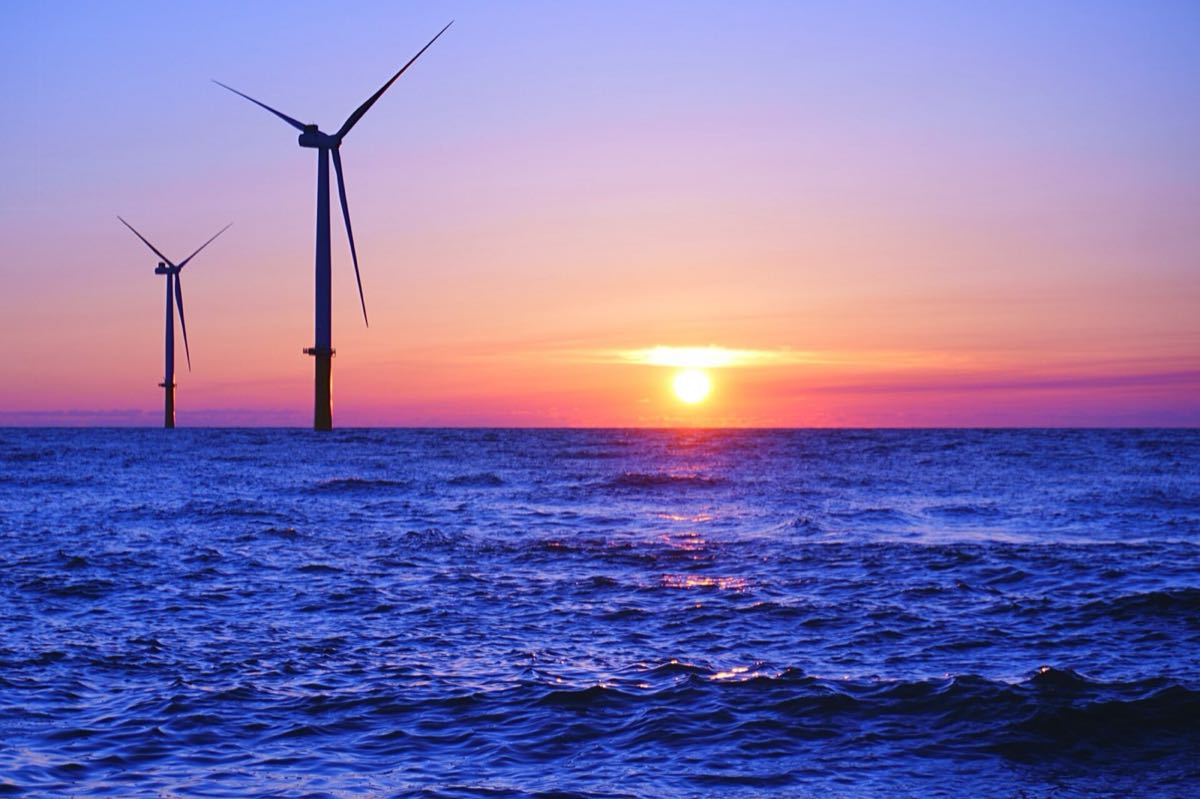
Hero image — Offshore turbines — 掬茶 · CC BY-SA 4.0 · Wikimedia Commons.
Frequently asked questions
Can AI replace a qualified inspector?
No. AI does not replace the inspecting engineer; it is a screening and review layer. A model flags candidate defects and grades them the same way across thousands of frames, but a qualified inspector reviews the findings and makes the maintenance call. The workflow stays human-in-the-loop, concentrating expert judgement on the uncertain, high-consequence cases.
How much labelled data do you need to start?
None. An open-vocabulary baseline detects and segments defects from a plain-language description — "leading-edge erosion", "lightning burn mark", "transverse crack" — so you get a first-pass defect map with no training set of your own. Labels only come later, and active learning keeps the number of images an expert must label small.
What defects does AI detect on wind turbine blades?
The common blade failure modes: leading-edge erosion, gelcoat and structural cracks, delamination and bond-line disbonds, lightning-strike damage and trailing-edge splits. Surface-visible defects suit camera-based detection; sub-surface damage still needs non-destructive testing such as thermography or ultrasonics. Findings are then classified, measured and graded on a severity scale, commonly Levels 1 to 5.
Why is wind turbine blade inspection so expensive?
Three things drive the cost. Access: reaching a blade needs a drone, rope-access team or platform, and offshore a vessel and weather window, with the turbine stopped and losing generation. Scale: a single turbine yields several hundred images. Consistency: manual grading drifts between inspectors, making genuine deterioration hard to separate from grading noise.
How does uncertainty decide which cases a human reviews?
Each detection carries an uncertainty estimate. High-confidence findings populate the report automatically, while low-confidence or borderline cases are routed to an engineer for a decision. This matches the risk-based, ALARP-style thinking UK engineers already apply and produces a traceable record — what was found, how confident the system was, and which cases a human reviewed.