Remote Visual Inspection in Nuclear: Cut Dose & Downtime
Remote visual inspection with AI cuts nuclear radiation dose and downtime — routing only low-confidence defect calls to your experts for review.
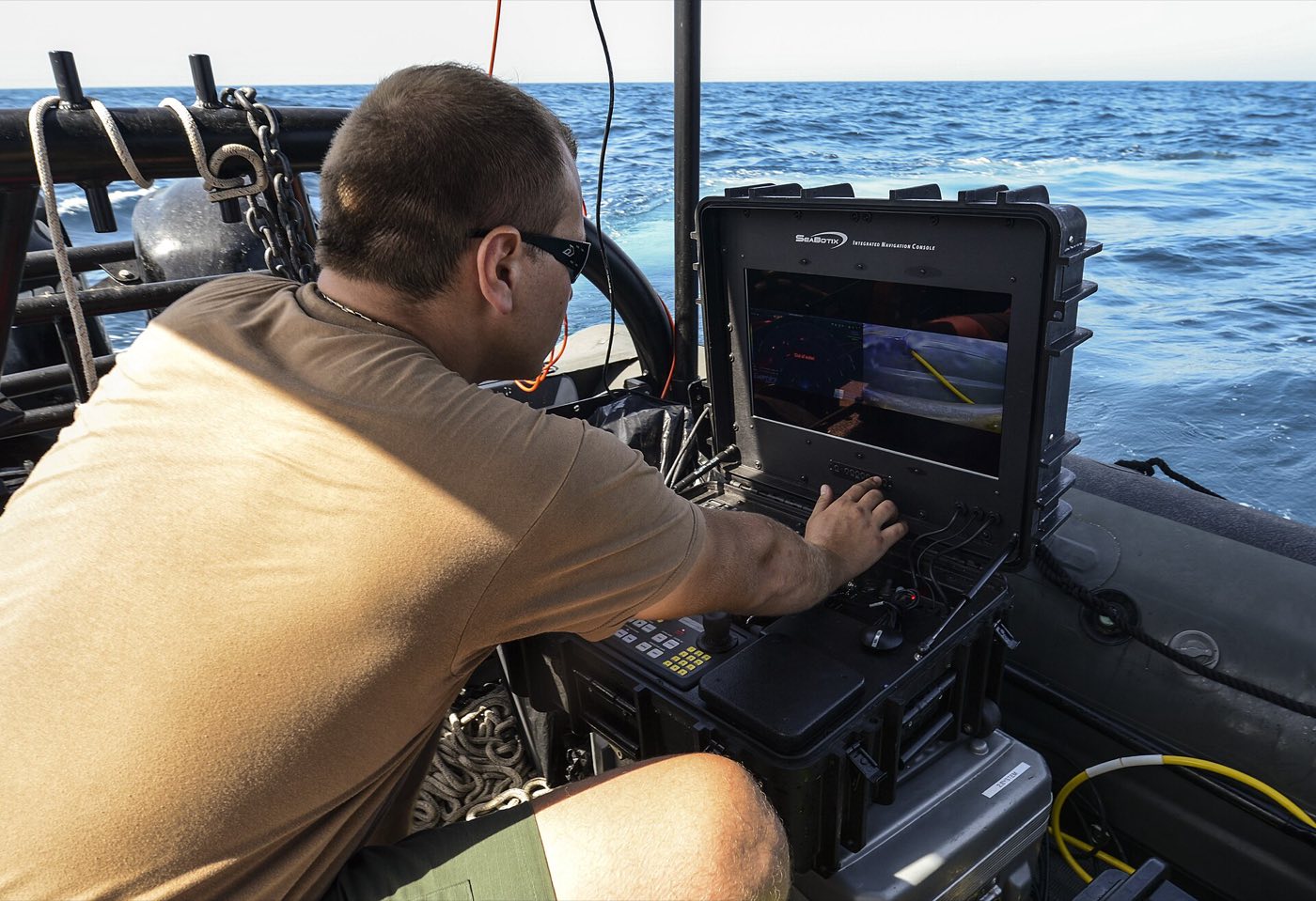
Remote visual inspection (RVI) is a non-destructive testing technique in which an inspector examines a component through a camera or optical system, such as a borescope, crawler, remotely operated vehicle or drone, rather than by direct line of sight. It keeps people away from hazardous or radioactive environments.
Remote visual inspection (RVI) lets you examine reactor internals, fuel ponds, gloveboxes and contaminated cells from a safe distance — using borescopes, pan-tilt-zoom cameras, crawlers, remotely operated vehicles (ROVs) and drones instead of sending a person to the asset. In a nuclear plant that distance is the whole point: it keeps operator radiation dose as low as reasonably practicable (ALARP) and avoids the shutdown time that manned entry demands. This article explains what remote visual inspection is, the equipment involved, and where computer vision now adds value — turning hours of recorded footage into a defensible, prioritised set of findings.
What is remote visual inspection?
Remote visual inspection (RVI) is a form of visual testing (VT) in which the inspector views the component through a camera or optical system rather than by direct line of sight. It is a recognised non-destructive testing (NDT) technique, governed by standards such as EN 13018 (visual testing — general principles) and, for welds, ISO 17637.
RVI sits alongside the other NDT families — ultrasonic, radiographic, magnetic particle and dye penetrant testing — as the first line of examination, and it underpins the broader move toward automated visual inspection. In nuclear it is frequently the only practical option: the component may be underwater, sealed inside a shielded cell, or simply too radioactive to approach. The camera goes where the engineer cannot.
Why does remote visual inspection matter in nuclear?
Radiation protection rests on three levers — time, distance and shielding. Remote visual inspection attacks the first two directly. Every minute an inspector does not spend in a radiation field is dose avoided, and every metre of standoff reduces exposure. The Office for Nuclear Regulation (ONR) expects licensees to demonstrate that exposures are ALARP, and the Ionising Radiations Regulations 2017 (IRR17) make dose limitation a legal duty rather than a nicety. RVI is one of the clearest ways to show that principle in practice.
Downtime is the second cost. Manned entry into a reactor cavity or a fuel pond typically means cooling, draining, scaffolding, permits and a full radiological work plan — days of preparation for hours of examination. RVI compresses much of that to deploying a camera on a mast, crawler or ROV. But it introduces its own bottleneck: hours of video that a qualified inspector must still review frame by frame, often against a background of poor lighting, reflections and radiation-induced sensor noise. That review is precisely where computer vision earns its place.
What equipment is used for remote visual inspection?
The RVI toolkit is broad. Rigid and flexible borescopes and videoscopes reach into pipework, heat exchangers and small bores. Pan-tilt-zoom cameras on masts survey vessels, ponds and shielded cells. Magnetic and tracked crawlers cover tank walls and floors. ROVs inspect submerged structures and fuel ponds, while UAVs (drones) handle stacks, buildings and external steelwork. The equipment differs, but the output does not: every device produces images and video, and every device shares the same downstream problem. Someone has to look at all of it and decide what matters — the same challenge you meet when you move from a general survey to focused AI weld inspection of a pressure boundary.
Where does computer vision fit into remote visual inspection?
Three characteristics of nuclear inspection make it a hard problem for conventional machine learning, and each maps to a specific capability rather than a generic "AI" promise.
Start with zero training data
You rarely have a neatly labelled library of, say, "pitting on a specific stainless liner" or "foreign object in a pond rack". Nuclear imagery is scarce, sensitive and difficult to share between sites. An open-vocabulary baseline sidesteps that: you describe what you are looking for in plain words — "corrosion", "cracking", "weld undercut", "debris" — and get a first detection and segmentation pass with no training set at all. That baseline turns a blank page into something an engineer can immediately correct, instead of a months-long data-collection exercise before any model exists.
Ask for the fewest, most useful labels
Expert time is expensive everywhere; in nuclear it is doubly so, because the expert and the asset access are both constrained. Active learning ranks recorded footage by how much the model would learn from a label, so your inspector confirms or corrects only the handful of frames that genuinely move the needle — not thousands of near-identical stills of clean surface. The labelling effort that remains is aimed where it counts, which matters when every hour of qualified review has to be justified.
Confidence you can defend
Nuclear inspection is safety-critical and evidence-driven, and a detector that is silently wrong is worse than no detector at all. Uncertainty quantification attaches a confidence score to every call, so you can set a threshold: high-confidence detections flow straight into the report, while low-confidence, ambiguous cases are routed to a human for adjudication. That is ALARP thinking applied to decisions as well as dose — expert attention is spent where the risk of a wrong call is highest, and the model never quietly overrules the engineer.
Keeping the engineer in the loop
None of this replaces the qualified inspector or the certification behind them — personnel qualified to EN ISO 9712, delivered in the UK through the PCN scheme administered by the British Institute of Non-Destructive Testing (BINDT). Computer vision is a triage and consistency layer, not a decision-maker. It watches every frame with the same attention at hour six as at minute one, produces an auditable record of what was flagged and why, and hands the engineer a prioritised worklist instead of raw footage. The judgement — and the accountability for it — stay firmly human. The same workflow underpins nuclear decommissioning and inspection, where data is scarcest and physical access is most expensive of all.
From footage to findings
The value of remote visual inspection has always been keeping people away from the hazard. Computer vision extends that logic one step further: it keeps expert eyes away from the ninety-plus percent of footage that shows nothing of interest, so they can concentrate on the cases that carry real risk. Start from an open-vocabulary baseline, let active learning target the labelling, and let uncertainty decide what a human sees — and a day of RVI footage becomes a short, defensible list of findings rather than a backlog.
Hazardous environments are exactly where remote visual inspection pays off, and exactly where a defensible, uncertainty-aware baseline matters most. Talk to us about hazardous-environment inspection and we will baseline your own footage — no training data required.
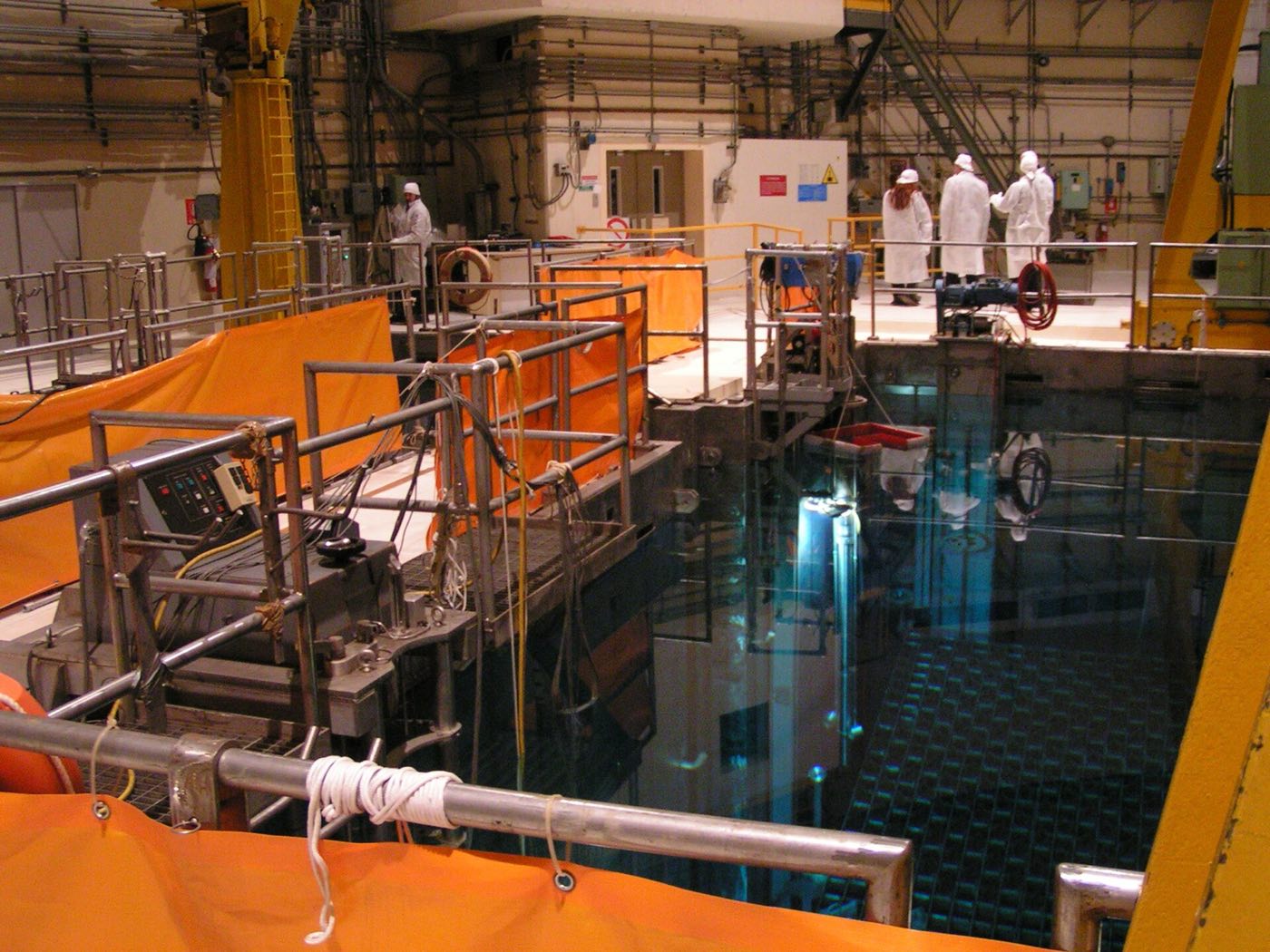
Hero image — A nuclear fuel pond — Simone Ramella · CC BY 2.0 · Wikimedia Commons.
Frequently asked questions
What is remote visual inspection?
Remote visual inspection is a non-destructive testing technique where an inspector views a component through a camera or optical system, such as a borescope, crawler, remotely operated vehicle or drone, instead of by direct line of sight. It is governed by standards including EN 13018 and, for welds, ISO 17637.
Why does remote visual inspection matter in nuclear?
In nuclear plants, RVI keeps operators out of radiation fields, supporting the ALARP principle and the dose limits set by the Ionising Radiations Regulations 2017. It also avoids the cooling, draining, scaffolding and permits that manned entry into a reactor cavity or fuel pond would demand, cutting both dose and downtime.
How much labelled data do you need to start?
None. An open-vocabulary baseline lets you describe what you are looking for in plain words, such as corrosion, cracking or debris, and returns a first detection and segmentation pass with no training set at all. You then correct that baseline rather than spending months collecting and labelling images before any model exists.
Can AI replace a qualified inspector?
No. Computer vision is a triage and review layer, not a decision-maker. It flags candidate defects and hands the engineer a prioritised worklist, but the judgement and accountability stay human. Qualified personnel, certified to EN ISO 9712 and delivered in the UK through the PCN scheme, remain firmly in the loop.
How does computer vision handle uncertain detections?
Every detection carries a confidence score, so you can set a threshold. High-confidence calls flow straight into the report, while low-confidence, ambiguous cases are routed to a human inspector for adjudication. Expert attention is spent where the risk of a wrong call is highest, and the model never quietly overrules the engineer.